
It all started with an idea many would have called crazy: driving a
Microlino across Morocco, over the Atlas Mountains, through the rocky
desert and all the way to the edge of the Sahara.
For Wolfgang Jenne and Martin Muehlberg, this challenge was
exactly what made the journey so compelling. Both had been following the RIVE
Maroc for some time, an international electric vehicle rally designed to make
electric mobility more visible in Morocco and across Africa. In 2025, two
Microlinos took part for the very first time, sending a strong signal for true
micromobility.
An adventure picks up speed
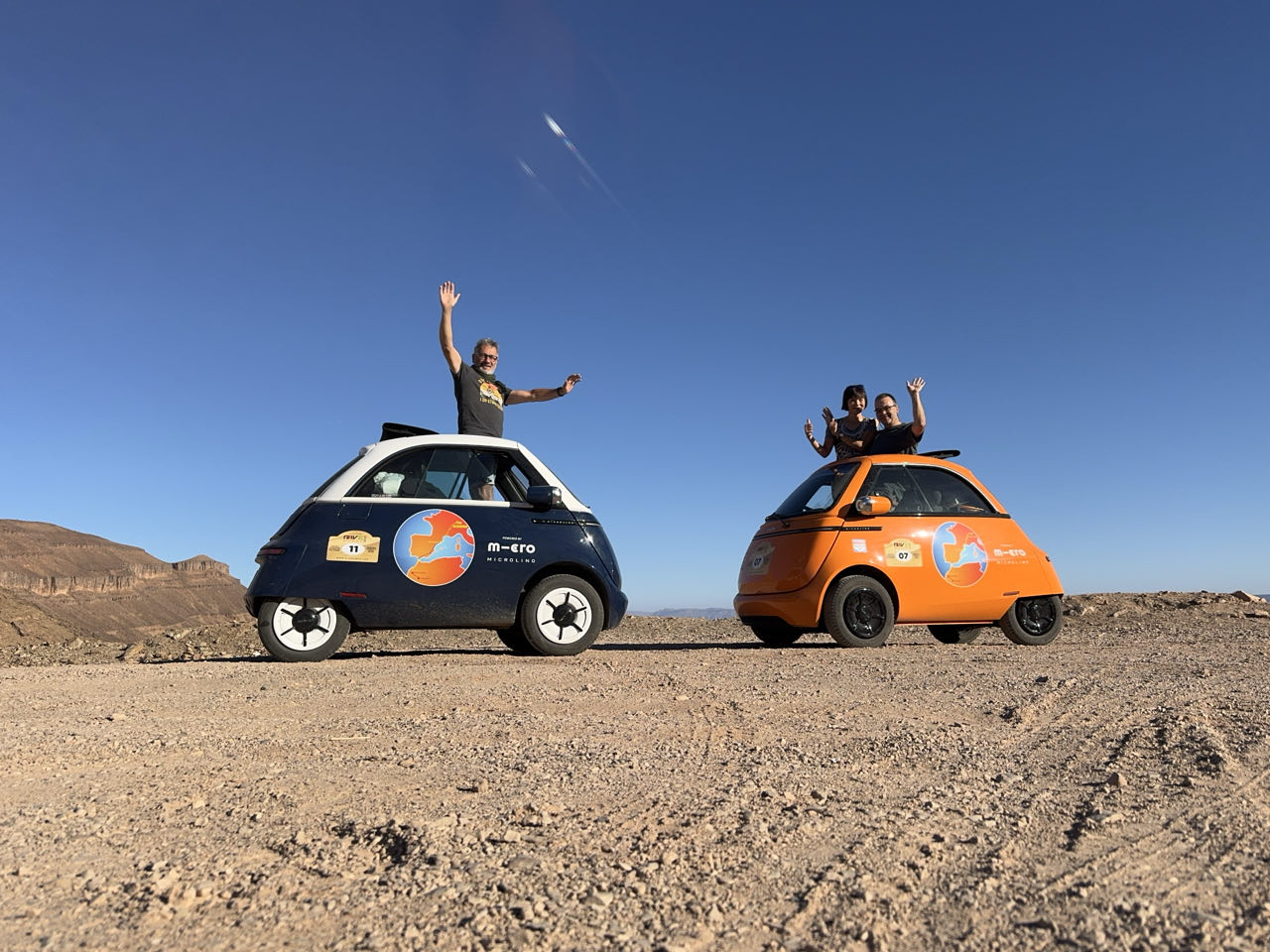
Martin began his journey on 19 October, right after his birthday, travelling in a transporter filled with spare parts, tools and his Microlino Pioneer. Wolfgang and his wife Bin set off from Liechtenstein as early as 13 October and arrived in Morocco on 20 October. Two days later, the two met in front of Casablanca and joined the other teams. Among them were Teslas, several electric campers and an electric motorbike. Yet it was the two Microlinos that drew attention wherever they went.
What makes the RIVE Maroc special
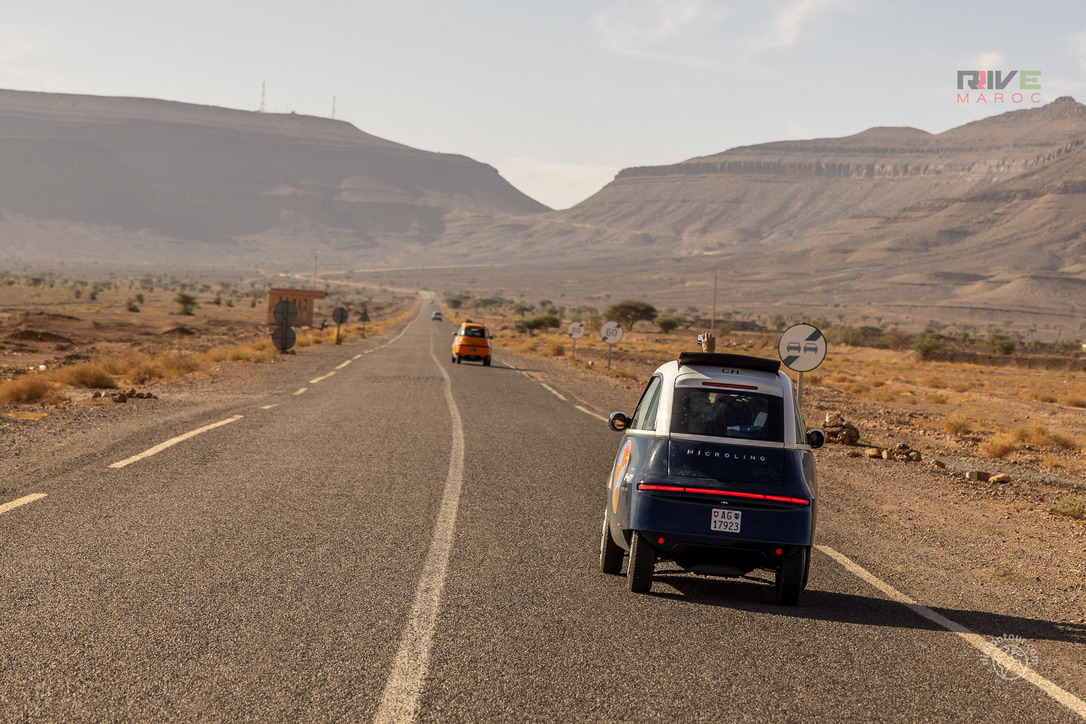
The RIVE Maroc is about far more than just a sporting challenge. It supports local schools, promotes the expansion of charging infrastructure and brings together people who live and drive forward electric mobility. The route leads over mountain passes up to 2,260 metres, through narrow valleys, along dusty tracks and finally to the first sand dunes of the Sahara.
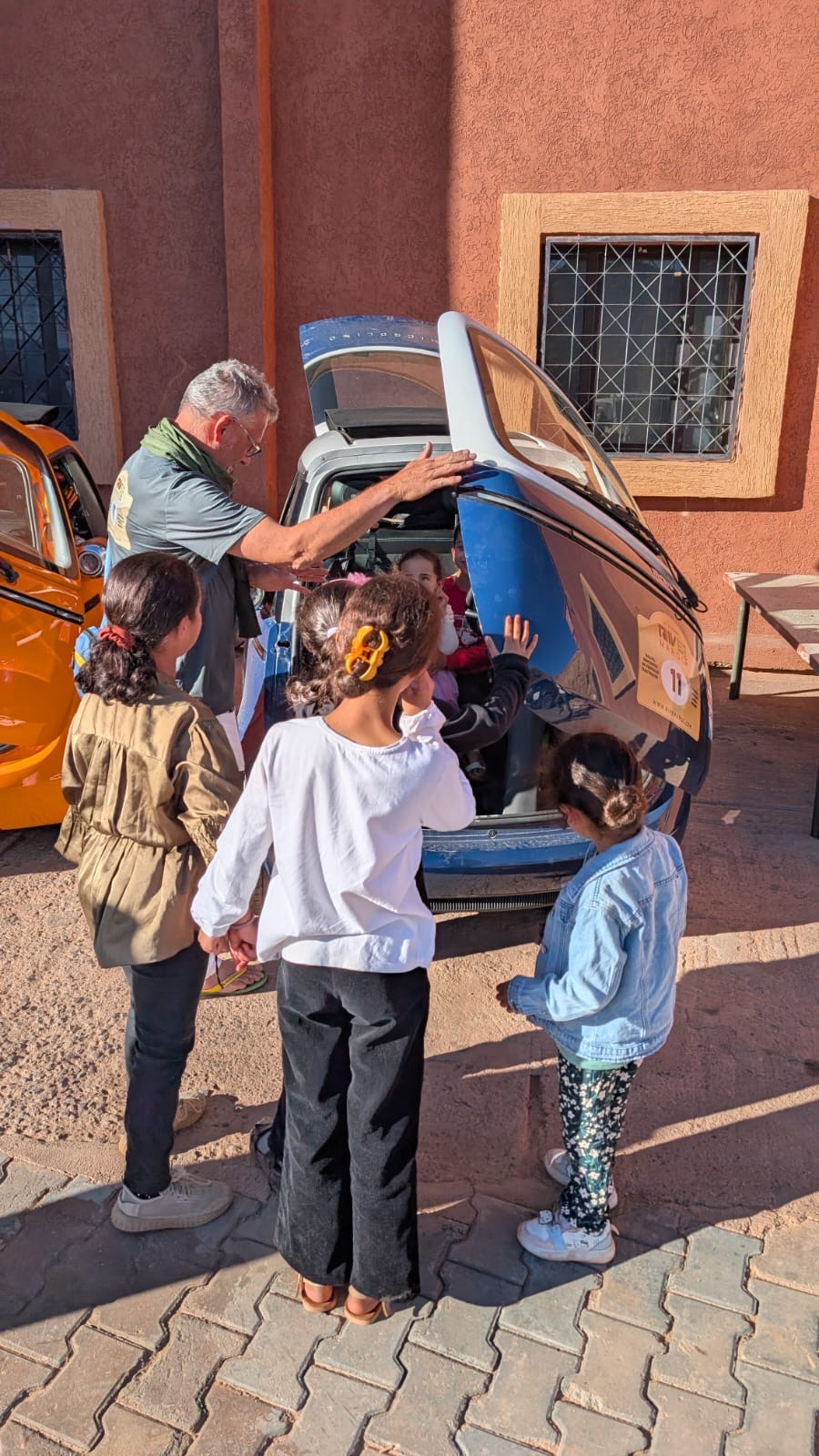
Already on the first day crossing the Atlas, it became clear that this journey
would be impressive not only from a technical point of view but also
emotionally. At an eco-school, curious children rushed towards the Microlinos,
climbed inside, took photos and enthusiastically compared the small vehicles
with the larger electric campers. The two Microlinos stole the show from every
other vehicle.
“The real appeal was not the rally itself, but the question of whether we could truly do all of this with a Microlino. That is what turned it into a real adventure for me,” Martin recalls.
Between technology and improvisation
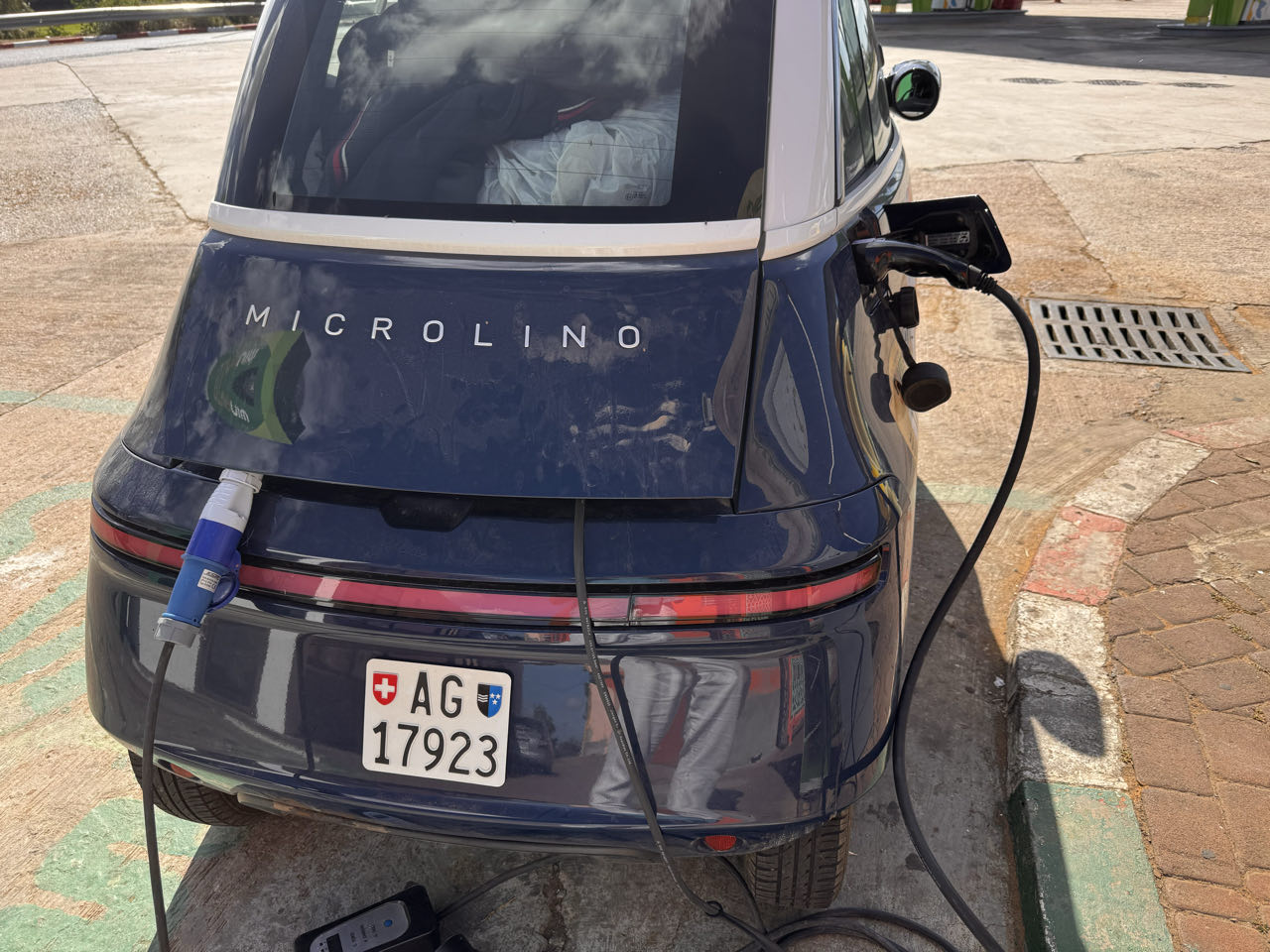
Both vehicles were carefully prepared for the rally. This included additional fans for better charging performance, spare parts, a diagnostic laptop, a DC converter, a replacement display and a spare wheel. Wolfgang went a step further and built his own high-performance charger from Huawei power modules, which later proved to be crucial.
An unexpected moment almost brought the journey to a standstill. In Zagora, a local electrician incorrectly installed a temporary charging solution and sent around 350 volts through the system instead of 220. The entire hotel was without power and Wolfgang’s charger was destroyed. It was sheer luck that his Microlino was the only one equipped with a second onboard charger. Without it, the journey would have been over.
From that moment on, improvisation became part of everyday life. Charging took place wherever there was any electricity at all: in a garden shed, at fuel stations, in an office at a workshop – or, if necessary, overnight with a power station in a hotel room or in a tent.
Magical moments in the desert
The days in the Sahara were unforgettable. The arrival at the first desert camp, the silence and the vast landscapes left a deep impression on both of them. The sunsets, which glow in unique colours only there, made every day special. Driving through the fine sand was challenging, but that was exactly what made the journey so rewarding.
Martin describes the entire journey as a sequence of intense emotions. One
memory that stayed with him was charging at night somewhere in Morocco. While
a lonely sky glowed in the background, locals kept stopping by, asking
questions, helping spontaneously or simply wanting a photo with the
Microlino.
Wolfgang also experienced moments that left a lasting mark on him.
“I
was surprised by how open people in Morocco are towards electric mobility.
There were practically only positive reactions. Progress is welcomed there,
while at home you often still have to explain why e-mobility makes sense,” he
says.
The Microlino shows what it can do
Despite the high demands, both vehicles experienced hardly any problems. No serious damage, no error messages. Ground clearance turned out to be better than expected, robustness was impressive and energy consumption was in some cases remarkably low. Particularly striking were the reactions of people in Morocco, who were genuinely enthusiastic about the two small city cars.
The adventure lives on
On 31 October, all participants visited the solar complex in Ouarzazate, one
of the largest in the world. There, countless more photos were taken, as
hardly any other vehicle was photographed as often as the two Microlinos.
In the end, Wolfgang had covered around 6,100 kilometres, while Martin had driven about 2,100 kilometres in the Microlino and 4,500 kilometres in the transporter. Both agree: it was an adventure they will never forget.
Looking ahead
Both drivers are not ruling out taking part in the RIVE Maroc again. An optimised setup, higher charging performance and perhaps a set of adapted tyres are already on their list of ideas. Wolfgang is also dreaming of the RIVE eDakar from Agadir to Dakar, a route of 2,400 kilometres that could well be achievable with a Microlino.
For us at Microlino, this chapter is a milestone. It shows what we stand for: courage, determination, a spirit of adventure and the conviction that micromobility can achieve far more than many people might think.
Experience the full journey in detail
Dive into the adventure of the two Microlinos and follow every stage of their RIVE Maroc journey directly on Polarsteps.
Team 007 – Wolfgang’s Microlino
Open journey on PolarstepsTeam 11 – Martin’s Microlino
Open journey on Polarsteps